Buy makestuff.eu ?
We are moving the project
makestuff.eu .
Are you interested in purchasing the domain
makestuff.eu ?
domain@kv-gmbh.de · 0541-91531010
Buy makestuff.eu ?
Can you explain saponification?
Saponification is a chemical reaction that occurs when a fat or oil is mixed with a strong alkali, such as sodium hydroxide (lye), resulting in the formation of soap and glycerin. During saponification, the alkali breaks down the ester bonds in the fat molecules, releasing fatty acids and glycerol. The fatty acids then react with the alkali to form soap molecules, while glycerin is a byproduct of the reaction. This process is commonly used in the production of soap. **
How does saponification work in chemistry?
Saponification is a chemical reaction that involves the hydrolysis of ester bonds in fats and oils by a strong base, typically sodium hydroxide or potassium hydroxide. This reaction results in the formation of glycerol and soap molecules, which are the salts of fatty acids. The hydroxide ions from the base break the ester bonds in the triglyceride molecules, releasing the fatty acids and glycerol. The fatty acids then react with the metal ions from the base to form soap molecules, which are soluble in water and have detergent properties. **


Similar search terms for Saponification
Top-Angebote
Products related to Saponification:
-
Inspired Finds Creative DIY Candle Sand Wax Colorful Pearl Granules For Handmade Candle Crafts 1.1lb GreenLet your creativity glow with vibrant sand wax for candle making that transforms simple containers into beautiful handmade candles. These colorful wax granules make candle crafting easy, relaxing, and endlessly customizable for hobbyists,...34,99 $*Shipping: 0,00 $Secure redirect to the provider
-
Inspired Finds Creative DIY Candle Sand Wax Colorful Pearl Granules For Handmade Candle Crafts 2.2lb WhiteLet your creativity glow with vibrant sand wax for candle making that transforms simple containers into beautiful handmade candles. These colorful wax granules make candle crafting easy, relaxing, and endlessly customizable for hobbyists,...62,99 $*Shipping: 0,00 $Secure redirect to the provider
-
Inspired Finds Creative DIY Candle Sand Wax Colorful Pearl Granules For Handmade Candle Crafts 1.1lb OrangeLet your creativity glow with vibrant sand wax for candle making that transforms simple containers into beautiful handmade candles. These colorful wax granules make candle crafting easy, relaxing, and endlessly customizable for hobbyists,...34,99 $*Shipping: 0,00 $Secure redirect to the provider
-
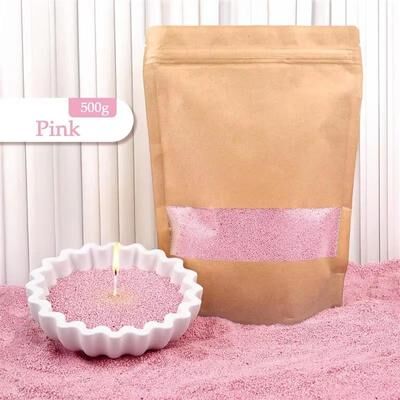
Inspired Finds Creative DIY Candle Sand Wax Colorful Pearl Granules For Handmade Candle Crafts 1.1lb PinkLet your creativity glow with vibrant sand wax for candle making that transforms simple containers into beautiful handmade candles. These colorful wax granules make candle crafting easy, relaxing, and endlessly customizable for hobbyists,...34,99 $*Shipping: 0,00 $Secure redirect to the provider



-
What are chemical reactions in saponification?
Chemical reactions in saponification involve the reaction of a fat or oil with a strong base, typically sodium hydroxide or potassium hydroxide. This reaction results in the formation of soap and glycerol. The fatty acids in the fat or oil react with the base to form the soap molecules, while glycerol is a byproduct of the reaction. Saponification is a key process in soap-making and is essential for the production of soap. **
-
Is this saponification reaction equation correct?
Yes, the saponification reaction equation provided is correct. Saponification is the process of making soap by reacting a fat or oil with a strong base, such as sodium hydroxide or potassium hydroxide. The reaction results in the formation of soap (sodium or potassium salts of fatty acids) and glycerol. The equation shown accurately represents this chemical transformation. **
-
What is the equation for saponification?
The general equation for saponification is: ester + base → alcohol + carboxylate salt. In the specific case of the saponification of a triglyceride (fat or oil) with a strong base such as sodium hydroxide, the equation is: triglyceride + sodium hydroxide → glycerol + 3 fatty acid salts. **
-
How can one derive the saponification value?
The saponification value can be derived by determining the amount of potassium hydroxide (KOH) or sodium hydroxide (NaOH) required to saponify a specific amount of fat or oil. This is typically done through a chemical reaction where the fat or oil is mixed with a known concentration of KOH or NaOH. The amount of KOH or NaOH used in the reaction is then measured, and the saponification value is calculated based on the molecular weight of the fat or oil. This value is important in determining the amount of alkali needed for soap making or in assessing the purity of fats and oils. **


What is the reaction equation for saponification?
The reaction equation for saponification involves the hydrolysis of an ester, typically a triglyceride, with a strong base such as sodium hydroxide or potassium hydroxide. The general equation for saponification is: Ester + Base → Alcohol + Salt of Fatty Acid. For example, in the saponification of a triglyceride like olive oil, the reaction equation would be: Triglyceride (olive oil) + 3NaOH → Glycerol + 3 Sodium Salts of Fatty Acids (soap). **
Need help with calculating the saponification value.
To calculate the saponification value of a fat or oil, you need to know the molecular weight of the fatty acid present in the sample. The saponification value is the amount of potassium hydroxide (KOH) required to saponify one gram of the fat or oil. You can calculate the saponification value using the formula: Saponification value = (560 x saponification equivalent weight) / molecular weight of the fatty acid. This value is important in determining the amount of lye needed for soap making or in quality control of fats and oils. **
Top-Angebote
Products related to Saponification:
-
Inspired Finds Creative DIY Candle Sand Wax Colorful Pearl Granules For Handmade Candle Crafts 1.1lb PurpleLet your creativity glow with vibrant sand wax for candle making that transforms simple containers into beautiful handmade candles. These colorful wax granules make candle crafting easy, relaxing, and endlessly customizable for hobbyists,...34,99 $*Shipping: 0,00 $Secure redirect to the provider
-
Inspired Finds Creative DIY Candle Sand Wax Colorful Pearl Granules For Handmade Candle Crafts 1.1lb WhiteLet your creativity glow with vibrant sand wax for candle making that transforms simple containers into beautiful handmade candles. These colorful wax granules make candle crafting easy, relaxing, and endlessly customizable for hobbyists,...34,99 $*Shipping: 0,00 $Secure redirect to the provider
-
Inspired Finds Creative DIY Candle Sand Wax Colorful Pearl Granules For Handmade Candle Crafts 1.1lb GreenLet your creativity glow with vibrant sand wax for candle making that transforms simple containers into beautiful handmade candles. These colorful wax granules make candle crafting easy, relaxing, and endlessly customizable for hobbyists,...34,99 $*Shipping: 0,00 $Secure redirect to the provider
-
Inspired Finds Creative DIY Candle Sand Wax Colorful Pearl Granules For Handmade Candle Crafts 2.2lb WhiteLet your creativity glow with vibrant sand wax for candle making that transforms simple containers into beautiful handmade candles. These colorful wax granules make candle crafting easy, relaxing, and endlessly customizable for hobbyists,...62,99 $*Shipping: 0,00 $Secure redirect to the provider
-
Can you explain saponification?
Saponification is a chemical reaction that occurs when a fat or oil is mixed with a strong alkali, such as sodium hydroxide (lye), resulting in the formation of soap and glycerin. During saponification, the alkali breaks down the ester bonds in the fat molecules, releasing fatty acids and glycerol. The fatty acids then react with the alkali to form soap molecules, while glycerin is a byproduct of the reaction. This process is commonly used in the production of soap. **
-
How does saponification work in chemistry?
Saponification is a chemical reaction that involves the hydrolysis of ester bonds in fats and oils by a strong base, typically sodium hydroxide or potassium hydroxide. This reaction results in the formation of glycerol and soap molecules, which are the salts of fatty acids. The hydroxide ions from the base break the ester bonds in the triglyceride molecules, releasing the fatty acids and glycerol. The fatty acids then react with the metal ions from the base to form soap molecules, which are soluble in water and have detergent properties. **
-
What are chemical reactions in saponification?
Chemical reactions in saponification involve the reaction of a fat or oil with a strong base, typically sodium hydroxide or potassium hydroxide. This reaction results in the formation of soap and glycerol. The fatty acids in the fat or oil react with the base to form the soap molecules, while glycerol is a byproduct of the reaction. Saponification is a key process in soap-making and is essential for the production of soap. **
-
Is this saponification reaction equation correct?
Yes, the saponification reaction equation provided is correct. Saponification is the process of making soap by reacting a fat or oil with a strong base, such as sodium hydroxide or potassium hydroxide. The reaction results in the formation of soap (sodium or potassium salts of fatty acids) and glycerol. The equation shown accurately represents this chemical transformation. **
Similar search terms for Saponification
-
Inspired Finds Creative DIY Candle Sand Wax Colorful Pearl Granules For Handmade Candle Crafts 1.1lb OrangeLet your creativity glow with vibrant sand wax for candle making that transforms simple containers into beautiful handmade candles. These colorful wax granules make candle crafting easy, relaxing, and endlessly customizable for hobbyists,...34,99 $*Shipping: 0,00 $Secure redirect to the provider
-
Inspired Finds Creative DIY Candle Sand Wax Colorful Pearl Granules For Handmade Candle Crafts 1.1lb PinkLet your creativity glow with vibrant sand wax for candle making that transforms simple containers into beautiful handmade candles. These colorful wax granules make candle crafting easy, relaxing, and endlessly customizable for hobbyists,...34,99 $*Shipping: 0,00 $Secure redirect to the provider
-
Inspired Finds Creative DIY Candle Sand Wax Colorful Pearl Granules For Handmade Candle Crafts 1.1lb BlackLet your creativity glow with vibrant sand wax for candle making that transforms simple containers into beautiful handmade candles. These colorful wax granules make candle crafting easy, relaxing, and endlessly customizable for hobbyists,...34,99 $*Shipping: 0,00 $Secure redirect to the provider
-
Inspired Finds Creative DIY Candle Sand Wax Colorful Pearl Granules For Handmade Candle Crafts 1.1lb GreyLet your creativity glow with vibrant sand wax for candle making that transforms simple containers into beautiful handmade candles. These colorful wax granules make candle crafting easy, relaxing, and endlessly customizable for hobbyists,...34,99 $*Shipping: 0,00 $Secure redirect to the provider
-
What is the equation for saponification?
The general equation for saponification is: ester + base → alcohol + carboxylate salt. In the specific case of the saponification of a triglyceride (fat or oil) with a strong base such as sodium hydroxide, the equation is: triglyceride + sodium hydroxide → glycerol + 3 fatty acid salts. **
-
How can one derive the saponification value?
The saponification value can be derived by determining the amount of potassium hydroxide (KOH) or sodium hydroxide (NaOH) required to saponify a specific amount of fat or oil. This is typically done through a chemical reaction where the fat or oil is mixed with a known concentration of KOH or NaOH. The amount of KOH or NaOH used in the reaction is then measured, and the saponification value is calculated based on the molecular weight of the fat or oil. This value is important in determining the amount of alkali needed for soap making or in assessing the purity of fats and oils. **
-
What is the reaction equation for saponification?
The reaction equation for saponification involves the hydrolysis of an ester, typically a triglyceride, with a strong base such as sodium hydroxide or potassium hydroxide. The general equation for saponification is: Ester + Base → Alcohol + Salt of Fatty Acid. For example, in the saponification of a triglyceride like olive oil, the reaction equation would be: Triglyceride (olive oil) + 3NaOH → Glycerol + 3 Sodium Salts of Fatty Acids (soap). **
-
Need help with calculating the saponification value.
To calculate the saponification value of a fat or oil, you need to know the molecular weight of the fatty acid present in the sample. The saponification value is the amount of potassium hydroxide (KOH) required to saponify one gram of the fat or oil. You can calculate the saponification value using the formula: Saponification value = (560 x saponification equivalent weight) / molecular weight of the fatty acid. This value is important in determining the amount of lye needed for soap making or in quality control of fats and oils. **
* All prices are inclusive of VAT and, if applicable, plus shipping costs. The offer information is based on the details provided by the respective shop and is updated through automated processes. Real-time updates do not occur, so deviations can occur in individual cases. ** Note: Parts of this content were created by AI.